

As June draws to a close, a palpable tension grips South Africa, stemming from an escalating anti-immigrant movement that has issued a chilling ultimatum: foreign nationals must leave the country by June 30, or face severe consequences. This deadline, enforced by self-styled vigilante groups, has ignited widespread fear and led to a surge in xenophobic attacks across various communities.
Voices of Fear and Desperation
For individuals like Nyirenda, a Malawian gardener living in a Johannesburg suburb, the threat is stark and personal. In early June, he recounted being confronted by two men who delivered a brutal message: “They asked me: ‘When are you going to leave the country? We want to fix our country. If you don’t leave now, you’re going to leave in a coffin because we don’t need anyone after 30th of June.’” This harrowing account is not isolated but reflects a broader, more sinister surge in anti-immigrant sentiment that has manifested in recent weeks through demonstrations, some of which have allegedly devolved into violent assaults. Both documented and undocumented foreign nationals are being targeted, frequently blamed for taking jobs from South Africans, engaging in criminal activities, and overburdening public services.
Government’s Firm Stance Amidst Unrest
The South African government has unequivocally rejected the June 30 “deadline” and the demands made by these groups. President Cyril Ramaphosa has repeatedly condemned the attacks on foreign nationals, asserting that such actions “do not represent the views of South Africa’s people, nor reflect our government’s policy.” He attributes the violence to “opportunists who are exploiting the legitimate grievances, particularly those of the poor, under the false guise of ‘community activism’.” In anticipation of potential unrest, particularly ahead of the proposed mass protests on Tuesday, President Ramaphosa issued a stern warning: the government “will not tolerate any attempts to destabilize the country by anyone, whether marching or otherwise.” Security forces have been placed on high alert to respond to any disturbances.
The Architects of Division
Driving much of this unrest are groups like March & March and Operation Dudula, whose name in Zulu roughly translates to “push back” or “force out.” March & March has publicly called for “immediate and massive deportation of all illegal foreigners currently in the country” and threatened mass protests if their demands are not met. Operation Dudula, known for its more aggressive tactics, has reportedly targeted foreign-owned businesses, conducted street stops to check identification documents, and attempted to block foreign nationals from accessing public hospitals. A prominent figure orchestrating these movements is Nkosikhona Ndabandaba, also known as “Phakel’umthakathi,” who claims to be the architect of the June 30 deadline. With over 1.7 million Facebook followers, Ndabandaba has successfully mobilized demonstrations, sometimes featuring men dressed in traditional Zulu warrior regalia, amplifying the movement’s presence.
Shadows of Violence and Displacement
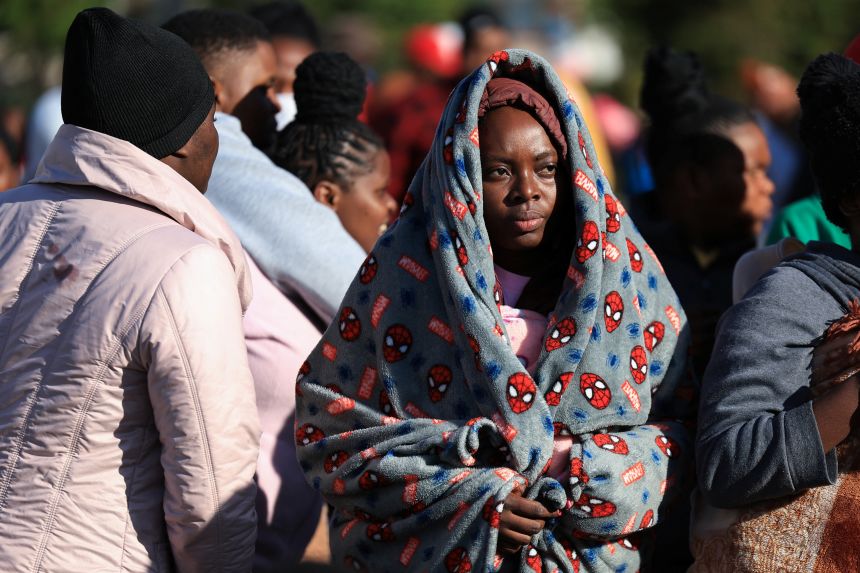
The rising tensions have already translated into tragic outcomes. Police in South Africa have initiated investigations into the recent murders of several foreign nationals. In late May, two Mozambican men were killed during violence in Mossel Bay, a coastal town in the Western Cape. The attacks there also resulted in the burning of over 50 shacks in an informal settlement. The Mozambican government later confirmed the deaths of five of its citizens, describing them as victims of “xenophobic attacks.” In another harrowing incident, authorities are investigating the death of a Malawian man, allegedly killed by a mob in an informal settlement in Pietermaritzburg, near Durban. This specific attack forced hundreds of migrants to flee their homes and seek refuge in local churches and mosques, according to the state broadcaster. The escalating fear has triggered a significant migrant exodus, as foreign nationals, particularly those residing in poor neighborhoods and informal settlements, continue to depart, uncertain of their safety after the looming deadline.
A Nation on Edge
As the June 30 deadline approaches, the uncertainty of what actions these anti-migrant groups might take next casts a long shadow. A disturbing video circulating on social media, reportedly showing a young man wielding a machete and counting down to the deadline, has only intensified the anxieties of migrants like Nyirenda. The current situation represents a profound challenge for South Africa, balancing the legitimate grievances of its citizens with the fundamental rights and safety of foreign residents. The outcomes of this volatile period will undoubtedly shape the nation’s social fabric and its standing among global news developments ↗, particularly concerning current affairs across Africa ↗. The world watches as South Africa navigates this critical juncture, hoping for a peaceful resolution and an end to the cycle of xenophobic violence.

