

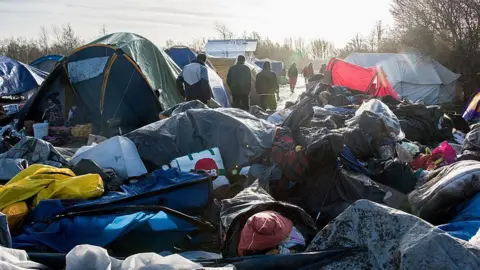
The shocking revelation that Twana Jamal, a man once described by French authorities as one of Europe's most successful people smugglers, has been discovered living and working in the UK has ignited a fierce debate about the nation's border security and asylum processing systems.
Jamal, an Iraqi Kurd, was handed a five-year jail sentence in France in 2016. At the time of his conviction, prosecutors detailed a vast operation, estimating he earned a staggering £100,000 a week by orchestrating the illegal movement of migrants across the Channel. His method then, from roughly 2012 to 2016, involved operating out of the Grand Synthe camp near Dunkirk, charging desperate individuals between £4,500 and £5,000 for passage to the UK, predominantly utilizing freight lorries rather than the small boats common today. In the camps, he was known by the formidable nickname "Pasha," a Turkish term signifying high rank, underscoring his significant influence within the smuggling networks.
A Notorious Figure's Re-emergence
Following a recent tip-off, an investigation successfully traced Jamal to the seemingly quiet village of Blaby in the UK. He was observed driving a car without a licence and, tellingly, appeared to be operating under a false name. Confronted, Jamal confirmed he had applied for asylum and stated he was "still waiting" for a decision. This situation immediately triggers serious concerns, as UK law stipulates a mandatory refusal of asylum for anyone who has served 12 months or more in prison overseas – a threshold Jamal's French conviction unequivocally meets.
The discovery of Jamal in the UK is not an isolated incident. The wider investigation that brought his presence to light also led to the arrest of another prominent people smuggler, Kardo Jaf, a story further explored in the [podcast To Catch A King](https://www.bbc.co.uk/sounds/brand/m0000nfh). Both Jamal and Jaf were linked to the "Ranya Boys," a name associated with a small number of Kurdish gangs that European law enforcement agencies contend have come to dominate the illicit cross-Channel people smuggling trade over the past 15 years.
Systemic Vulnerabilities Exposed
This case dramatically underscores potential vulnerabilities within current UK border controls, particularly concerning the screening of asylum seekers who may have committed serious crimes abroad. Key findings from recent investigations highlight several critical issues:
* More than 20 active smugglers: Investigations have identified over two dozen active people smugglers who have successfully reached the UK, with some possessing overseas criminal convictions and others attempting to claim asylum using false identities.
* Post-Brexit challenges: Immigration officers have indicated that since the UK's departure from the European Union, the process of checking criminal records from certain other countries has become notably more difficult.
* Asylum application loopholes: The fact that a high-profile, convicted criminal like Jamal, facing a mandatory asylum refusal under existing statutes, is still awaiting a decision, suggests potential backlogs or procedural gaps in the asylum system.
The implications extend beyond individual cases, calling into question the integrity of the UK's immigration processes and its ability to safeguard national security. The ease with which a convicted international criminal can seemingly enter and reside within the country, apply for asylum, and remain undetected for a period, suggests a pressing need for a comprehensive review of screening protocols and information-sharing mechanisms with international partners. As [parliamentary discussions](https://questions-statements.parliament.uk/written-questions/detail/2025-11-11/90044) on immigration and security continue, the urgency of addressing these exposed fragilities becomes ever more apparent.






Leave a comment